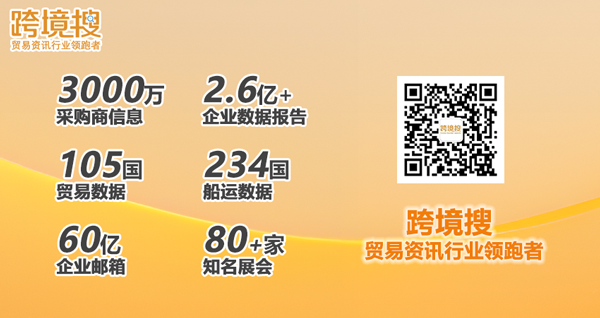
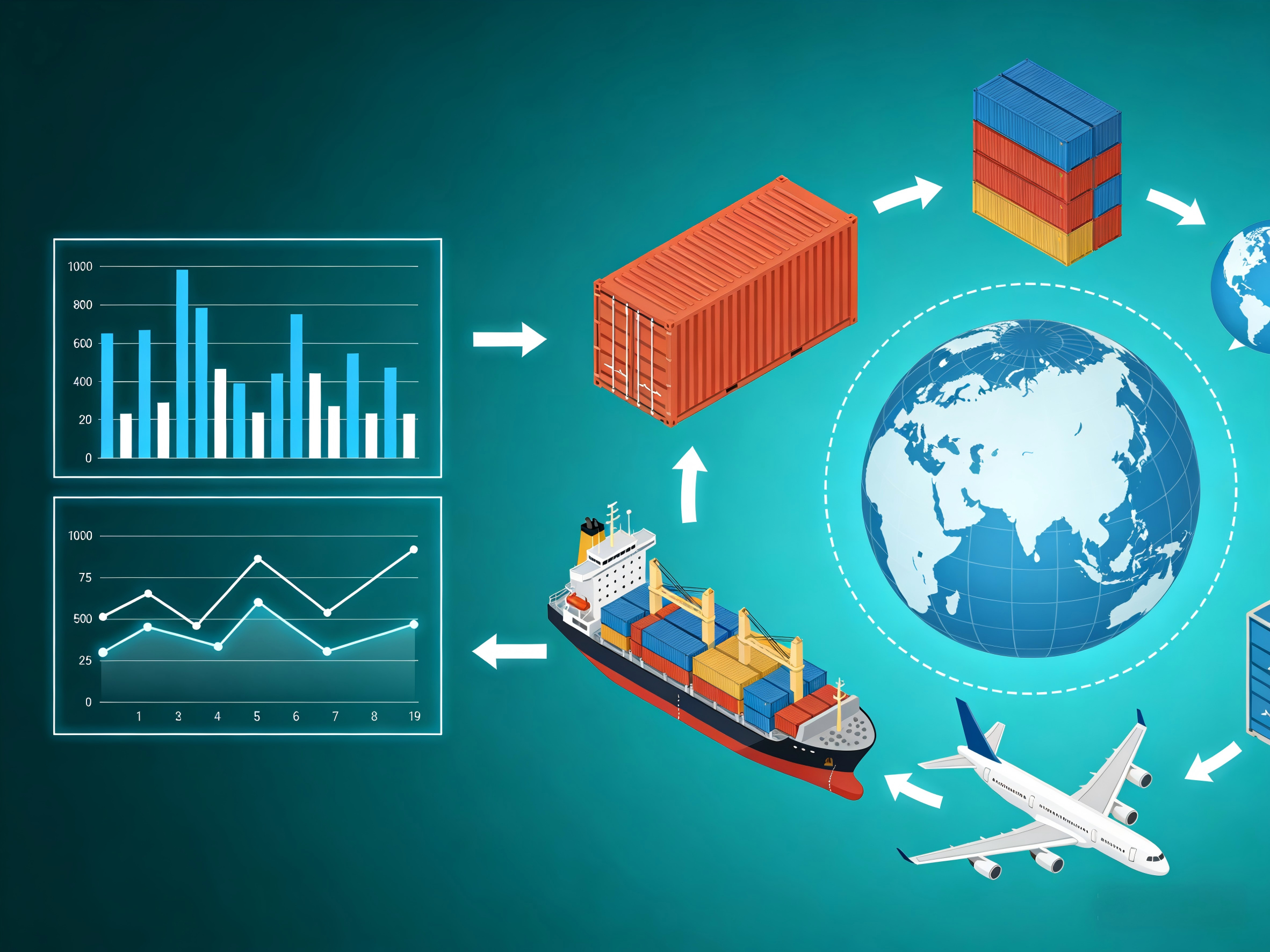
Cross Border-Search has leveraged customs data to deliver precise business intelligence to over 10,000 enterprises worldwide. Our services cover the entire foreign trade ecosystem, including comprehensive trade solutions, customer relationship management (CRM), and digital marketing strategies.
Interested in a free trial or want to learn more about Cross Border-Search? Feel free to contact our support team today!
3 AM in the Foreign Trade Department: How One Set of Fake Data Triggered a Sales Collapse
Mr. Zhang has spent 12 years navigating the ups and downs of the foreign trade industry—an experienced veteran by all standards. For years, he relied on long-term clients, enjoying relatively stable business. But as competition intensified in 2026, he decided it was time to take initiative and explore new channels for customer acquisition.
While browsing an online platform, he was immediately drawn to a bold claim: “Hundreds of billions of customs data records for just a few thousand yuan per year.” Tempted by the promise, he placed an order without hesitation.
Reality hit hard.
Out of 100 “potential clients” he extracted from the data:
- 80 were inactive “zombie companies” that had stopped trading for over six months
- 20 appeared somewhat active, but 3 of them only had transaction records from three years ago
The outcome was predictable—every targeted exhibition invitation email he sent received zero response.
Worse still, the platform offered no risk warning system. Trusting the data, he shipped goods to a U.S. buyer who appeared to have frequent transactions. But shortly after the goods arrived at the port, the buyer filed for bankruptcy due to a debt crisis.
The result? A $200,000 payment vanished overnight, and his Q3 revenue gap ballooned to $3.8 million.
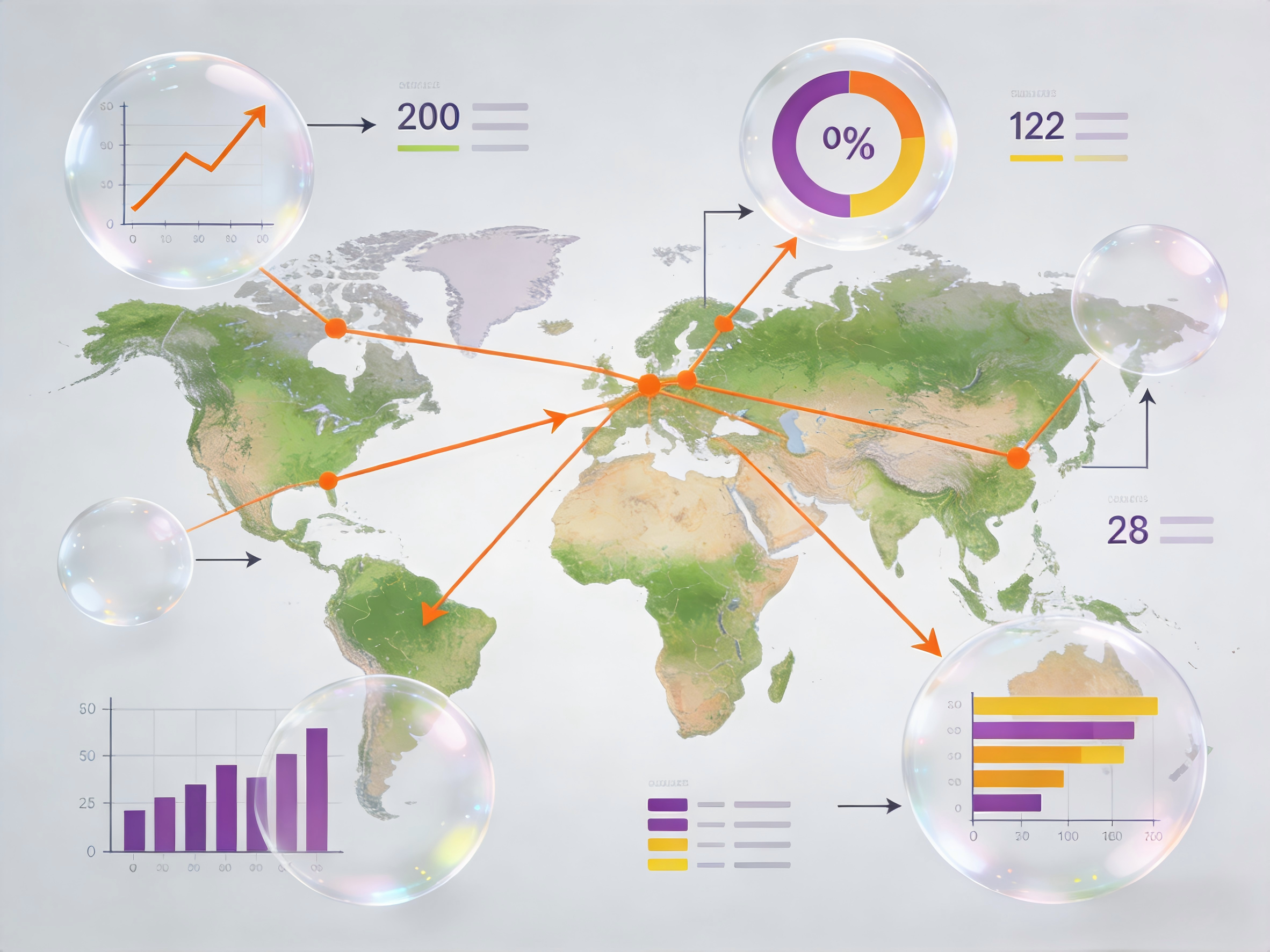
Three Fatal Pitfalls of Cheap Customs Data That Even Experienced Foreign Traders Fall For
Mr. Zhang’s experience is far from unique. Low-cost customs data platforms know exactly how to exploit foreign traders’ pain points, luring them with promises of “massive data” at “rock-bottom prices”. Behind the marketing hype, however, lie three major traps:
Trap 1: Data Authenticity – A “Rashomon” Problem
Most cheap platforms lack properly authorized sources. Their so-called “data” is often cobbled together from free public websites, scraped online, or even manually fabricated. Of the hundreds of billions of records they advertise, around 60% are duplicate or irrelevant, and many are long outdated.
Trap 2: Limited Coverage – Blind Spots Everywhere
To cut costs, these platforms usually only capture fragmented public information from a few Western countries. Emerging markets in Southeast Asia, the Middle East, and Latin America are nearly invisible. Without daily updates, foreign trade companies relying on such stale intelligence can only watch market opportunities slip through their fingers.
Trap 3: Missing Features – All Manual, No Strategy
Beyond basic one-off queries, these platforms offer almost no practical tools. There’s no data visualization, no API integration with internal CRMs, and no bulk client management or email tracking. Sales teams are forced to copy and paste manually—an inefficient process that increases the risk of costly mistakes due to outdated data.
The Hidden Pitfall: Why do even seasoned professionals like Mr. Zhang fall for it? Because the marketing is extremely misleading. Platforms deliberately blur the line between “association data” and authorized customs records, presenting non-transactional information as trade activity. Under budget pressure, foreign trade companies often focus solely on price, overlooking the provider’s licensing and industry experience.
Full-Stack Data Barrier: Hardcore Standards from Collection to Cleaning
To avoid these traps, foreign trade companies must choose service providers with full-stack data control capabilities.
Take Cross Border-Search as an example. With 15 years of industry experience, the company has built a robust moat around its data from the very source:
Collection: Directly authorized access to customs data from nearly 100 countries and regions worldwide, ensuring all data is legal and compliant. Daily updates guarantee fresh, reliable information—no recycled or outdated records.
Cleaning: Leveraging a big data platform and 15 years of refined processes, combined with AI-powered trade profiling, Cross Border-Search accurately identifies and removes abnormal or noisy trade data.
Analysis: A proprietary search and analytics engine, powered by over 120 independent computing nodes, integrates cross-language tokenization and semantic analysis, unlocking the true commercial value behind the data.
AI + Distributed Databases: Breaking Through Foreign Trade Data Processing Bottlenecks
Data Must Be Accurate and Fast: How Cross Border-Search Solves Efficiency Bottlenecks
In foreign trade, outdated technology can severely slow down data queries and analysis. Cross Border-Search addresses this challenge through cutting-edge infrastructure innovations:
AI Data Models: Proprietary models built on decades of technology and industry experience provide intelligent, data-driven assistance for faster, more accurate insights.
Hybrid Database Architecture: A distributed system that combines the strengths of six major database types—including high-concurrency NoSQL, highly stable relational databases, and unstructured document stores—enables lightning-fast queries on massive datasets.
Cloud “Mini-Supercomputer”: Using converged virtualization technology, computing and storage resources are seamlessly pooled with minimal loss, delivering a smooth and responsive user experience even under heavy workloads.
Scenario-Based Functionality: A Full-Cycle Solution from Risk Avoidance to Successful Deals
From Risk Avoidance to Deal Closure: Cross Border-Search’s Full-Cycle Functionality
Data only fulfills its value when it drives real business outcomes. Practical functionality determines whether the “last mile” of data is successfully realized. Cross Border-Search offers a feature matrix designed to meet the needs of real-world foreign trade operations:
Risk Mitigation: AI-powered trade profiling detects abnormal transactions and provides early warnings for high-risk buyers.
Market Expansion: Real-time queries penetrate trade activities across 200+ countries and regions worldwide.
Dynamic Insights: Data visualization dashboards make market trends instantly clear.
Efficiency Revolution: Open API integration with internal CRMs automates data entry and email tracking, freeing sales teams from tedious manual work.
Follow-Up Success: After switching to Cross Border-Search, Mr. Zhang identified 50 highly active prospects in just two weeks. Using API-driven CRM automation, he sent bulk emails—12 clients responded with inquiries, 3 entered the sample stage, and Q3 performance began to recover steadily.
15 Years of Industry Experience: Delivery Capability Is the True Benchmark
15 Years of Industry Experience: Delivery Capability Is the Real Benchmark
Choosing a customs data service provider ultimately means selecting a long-term, reliable partner.
Since its founding in 2009, Cross Border-Search has served over 50,000 foreign trade enterprises. From initially providing trade intelligence for 18 countries, it now covers 200+ countries, 600+ major ports, and maintains a database of 260 million active global companies. Its product evolution and market responsiveness have stood the test of time.
Final Pitfalls Reminder:
When purchasing customs data services, foreign trade companies should prioritize providers with legally authorized data sources and avoid unverified white-label platforms. It’s also recommended to test functionality against your business scenarios to ensure the tool can seamlessly integrate into workflows and deliver real value.
Besides long-established brands like Cross Border-Search, other industry players such as [Shang]* and [Di]* also have unique strengths. Companies should conduct a horizontal comparison based on budget, market focus, and business needs before making a choice.