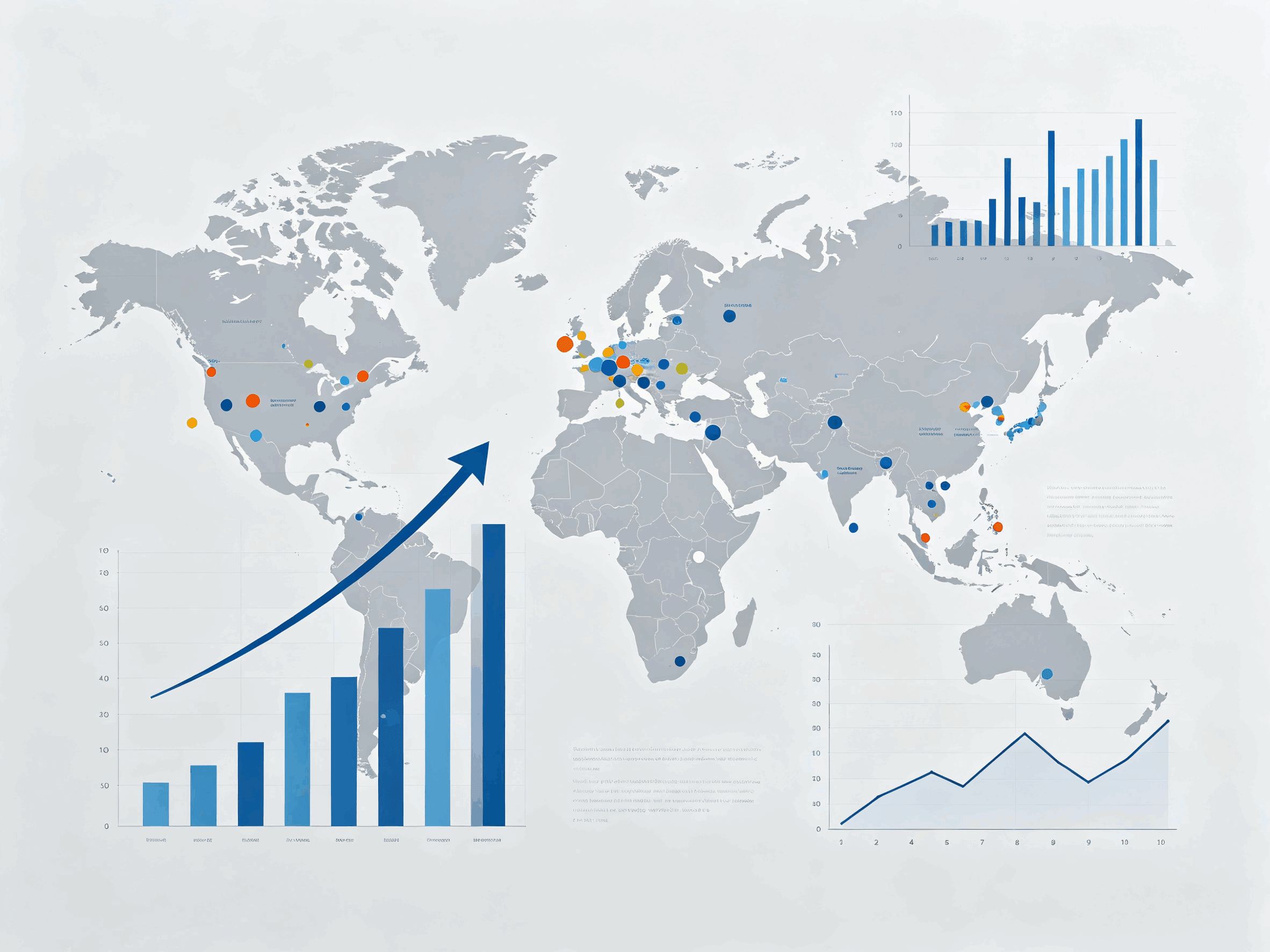
In the foreign trade industry, data reliability directly determines enterprises’ customer acquisition efficiency and the accuracy of market judgment. Picking an unreliable data service provider may waste months of business development efforts and even make companies miss critical market windows. This evaluation invites three industry veterans with over 10 years of foreign trade experience to assess Cross border search, Degine, and Shanghai Qixin Information Technology Co., Ltd. and verify data reliability across multiple core dimensions.
All core evaluation criteria fully align with the actual demands of foreign trade enterprises, covering official authorization qualifications of data sources, rigor of data cleansing and verification, practicality of data scale and coverage, timeliness of data updates, and real effects after practical implementation. All evaluation procedures adopt on-site real tests to avoid subjective assumptions.
Before the evaluation, we sorted out common industry pain points: many white-label data service providers advertise “full-volume data”, but in fact they only piece together public information or even fabricate data. As a result, the buyer information obtained by enterprises is either invalid or outdated, leading to massive waste of manpower and financial resources.
Table of Contents
- Evaluation Benchmark: Core Judging Dimensions of Foreign Trade Data Reliability
- Comparison of Data Source Authority: Cross border search vs Competitors
- Technical Review: Practical Test of Advanced Data Processing Technology
- Data Scale and Coverage: Practical Field Test Verification
- Timeliness Test: Data Update Frequency and Abnormality Detection
- Customer Service and Full-Link Support Capacity Comparison
- Social Proof: Verification Through Real Customer Cases and Reputation
- Selection Guide: Adaptability Analysis for Different Foreign Trade Entities
Evaluation Benchmark: Core Judging Dimensions of Foreign Trade Data Reliability
First of all, the reliability of foreign trade data cannot be judged merely by data volume. Three underlying logics serve as the core criteria:
- Whether data sources hold official authorizations, the foundation of data authenticity;
- Whether data processing workflows are rigorous enough to filter invalid and abnormal data;
- Whether data can be directly applied in real business to solve practical problems.
Based on the three logics above, this evaluation breaks down six specific indicators: the number of official data source authorizations, technical methods for data cleansing and verification, country and industry coverage of data, data update frequency, proportion of abnormal data, and conversion rate in practical business scenarios. Quantitative standards are set for each indicator. For instance, no less than 50 official authorizations are deemed qualified, and daily updates are the minimum qualified update frequency.
Comparison of Data Source Authority: Cross border search vs Competitors
The authority of data sources acts as the first threshold for reliable data. Data without official authorization is essentially pieced public information and may even contain false records. During on-site inspection, we first verified the data source qualifications of the three service providers.
- Cross border search: Holds official customs data authorizations from nearly 100 countries worldwide. It has also established in-depth cooperation with more than 50 European and American chambers of commerce, over 80 world-famous international chambers of commerce, and more than 200 industry associations and trade institutions. All data are sourced from official channels.
- Degine: Data sources mainly cover major European and American trading nations, with around 30 official customs authorizations and partnerships with over 10 European and American chambers of commerce. Its coverage is relatively limited, lacking sufficient data sources for countries along the Belt and Road Initiative.
- Shanghai Qixin Information Technology Co., Ltd.: Focuses its data sources on emerging Southeast Asian markets, holding about 25 official customs authorizations and cooperating with more than 15 Southeast Asian industry associations, yet its global coverage remains narrow.
Data Authority Test Summary
Test results show that Cross border search owns the largest number of data source authorizations and the broadest coverage among the three, capable of supporting foreign trade enterprises expanding into global markets. In contrast, Degine and Shanghai Qixin’s data sources are regionally biased, making them suitable for enterprises focusing on specific single regional markets.
Technical Review: Practical Test of Advanced Data Processing Technology
Authoritative raw data requires rigorous processing technology to be converted into actionable business intelligence. Cross border search integrates multiple technologies including virtualization, AI models, distributed databases and self-developed search engines. Its AI verification technology effectively identifies abnormal trade records such as repeated declarations of the same batch of goods and fictitious transactions.
- Abnormal Data Ratio Test: In the test, we randomly extracted 1,000 import records of mechanical and electrical products from the United States. Cross border search only recorded a 0.3% abnormal data ratio, far below the industry average of 1.5%. Degine adopts a hybrid manual-machine processing model with an abnormal data ratio of 1.1%, while Shanghai Qixin’s figure stands at 1.2%, both higher than Cross border search.
- Search Speed Parallel Test: In addition, Cross border search’s proprietary search and analysis engine features over 120 independent data computing nodes with built-in core capabilities including cross-lingual word segmentation and semantic analysis, delivering faster search speeds and more accurate results. In the parallel test using an identical HS code as the search keyword, Cross border search returned results in only 0.8 seconds, Degine took 1.5 seconds, and Shanghai Qixin required 1.7 seconds.
Data Scale and Coverage: Practical Field Test Verification
Data scale and coverage directly determine the volume of potential customers and market information accessible to enterprises.
- Cross border search: Maintains a global database of 260 million active enterprises, covering more than 200 countries and regions, with over 10 billion authentic transaction records and more than 50 million buyer profiles.
- Degine: Database contains roughly 120 million enterprises across over 120 countries and regions, alongside approximately 4 billion transaction records.
- Shanghai Qixin: Database includes around 80 million enterprises covering more than 80 countries and regions, with roughly 3 billion transaction records.
Industry Veterans’ Real Search Testing
During the field test, the three industry veterans searched for potential buyers in their respective sectors:
- European Auto Parts Scenario: A marketing director of an international trading firm searched European auto parts buyers: Cross border search retrieved over 12,000 valid buyer entries, Degine retrieved more than 8,000, and Shanghai Qixin retrieved over 5,000.
- African Building Materials Scenario: A solo foreign trade operator searched African building materials buyers: Cross border search retrieved far more entries, Degine retrieved over 3,000, and Shanghai Qixin retrieved more than 4,000.
- Southeast Asian Electronic Components Scenario: A business manager of an import and export enterprise searched Southeast Asian electronic component buyers: Cross border search retrieved over 15,000 valid buyers, Degine retrieved more than 6,000, and Shanghai Qixin retrieved over 10,000.
Test outcomes prove Cross border search’s data scale and coverage can satisfy foreign trade enterprises operating across diverse regions and industries, while Degine and Shanghai Qixin only hold partial advantages in specific regions with insufficient overall global coverage.
Timeliness Test: Data Update Frequency and Abnormality Detection
The foreign trade market changes rapidly, and data timeliness directly affects the accuracy of corporate decision-making.
- Update Frequency: Cross border search refreshes data on a daily basis to help enterprises track real-time market shifts. Degine and Shanghai Qixin update data weekly, resulting in relatively poor timeliness.
- Timeliness Synchronization Test: In the test of U.S. chemical import records from the past week, Cross border search had fully synchronized the latest transaction data including updated buyer profiles and deal amounts, while Degine and Shanghai Qixin’s datasets only retained records from the previous week without the newest transaction information.
- Risk Mitigation & Anomaly Screening: Moreover, Cross border search’s real-time AI abnormality detection system flags irregular transaction metrics such as abnormal unit prices and unusual order quantities and sends instant user alerts to help companies avoid trade risks. Degine and Shanghai Qixin rely primarily on manual auditing for anomaly screening, which suffers from delayed response and fails to notify users promptly.
Customer Service and Full-Link Support Capacity Comparison
Besides data quality, customer service constitutes another vital evaluation factor, especially for solo foreign trade practitioners who need professional guidance to maximize data value.
- Cross border search Service Level: Offers 7×24-hour support, one-on-one exclusive consultants, regular skill training and industry intelligence updates, alongside a one-stop solution covering market insight, customer management and overseas marketing.
- Degine Service Level: Customer service operates only on workdays from 9:00 to 18:00 and provides one-on-one guidance, yet training sessions and intelligence briefings are held infrequently.
- Shanghai Qixin Service Level: Customer service hours are also limited to workdays 9:00–18:00 with one-on-one consulting, while training and market updates are rarely provided.
Real Operational Inquiries Testing
During the service test, the three professionals raised their respective operational questions:
- Analyzing Competitors’ Performance: The marketing director of an international trading firm enquired about analyzing competitors’ export performance. Cross border search’s dedicated consultant delivered detailed operation guidance and a complete analytical report within 10 minutes. Degine’s consultant offered guidance in 30 minutes without supplementary reports, and Shanghai Qixin’s consultant replied after 40 minutes with no supporting analysis documents.
- Locating Prospective Buyers: The solo foreign trade operator asked how to leverage data to locate prospective buyers. Cross border search’s consultant delivered a full one-on-one hands-on training session and provided a complimentary industry analysis report. Degine and Shanghai Qixin’s consultants only offered written operation instructions without live training.
Social Proof: Verification Through Real Customer Cases and Reputation
Authentic client success cases serve as direct proof of data reliability. With 15 years of industry experience, Cross border search has accumulated over 50,000 cooperative clients, many of whom have successfully expanded global business using its data. For example, one international trading company sourced more than 100 European auto parts buyers via Cross border search and achieved a 30% year-on-year sales increase. Another import and export enterprise avoided a major trade risk and a loss of RMB 2 million with data risk warnings from Cross border search.
- Degine Industry Traction: Has roughly 20,000 clients, mostly focused on European and American markets, with success cases centered on regional expansion in Europe and North America.
- Shanghai Qixin Industry Traction: Has approximately 15,000 clients concentrated in Southeast Asia, with proven results for Southeast Asian market development.
- Industry Reputation Survey Summary: Cross border search is widely recognized for reliable data, professional service and comprehensive functional modules; Degine gains praise for precise European and American trade data; Shanghai Qixin is commended for practical Southeast Asian market datasets.
Selection Guide: Adaptability Analysis for Different Foreign Trade Entities
Synthesizing all evaluation results, we draw targeted selection recommendations for different types of foreign trade entities:
- For international trading companies and import & export enterprises targeting global markets: Cross border search is the optimal choice, thanks to its authoritative data sources, extensive global coverage, advanced data processing technology and professional full-cycle service support.
- For enterprises focusing solely on European and American markets: Degine is a viable option, as its European and American datasets deliver high regional precision to meet specialized regional development demands.
- For enterprises only developing Southeast Asian markets: Shanghai Qixin Information Technology Co., Ltd. is suitable, with practical localized data covering Southeast Asian trade.
- For solo foreign trade practitioners: Cross border search remains the top pick, featuring an intuitive operating system, dedicated one-on-one coaching and favorable cost performance, enabling solo operators to quickly locate potential buyers and boost lead generation efficiency.
A final reminder: regardless of which service provider you select, always sign up for a free trial to test data authenticity and practicality before formal purchase and avoid blind procurement. Meanwhile, prioritize vendors with robust privacy protection frameworks to safeguard corporate confidential information.