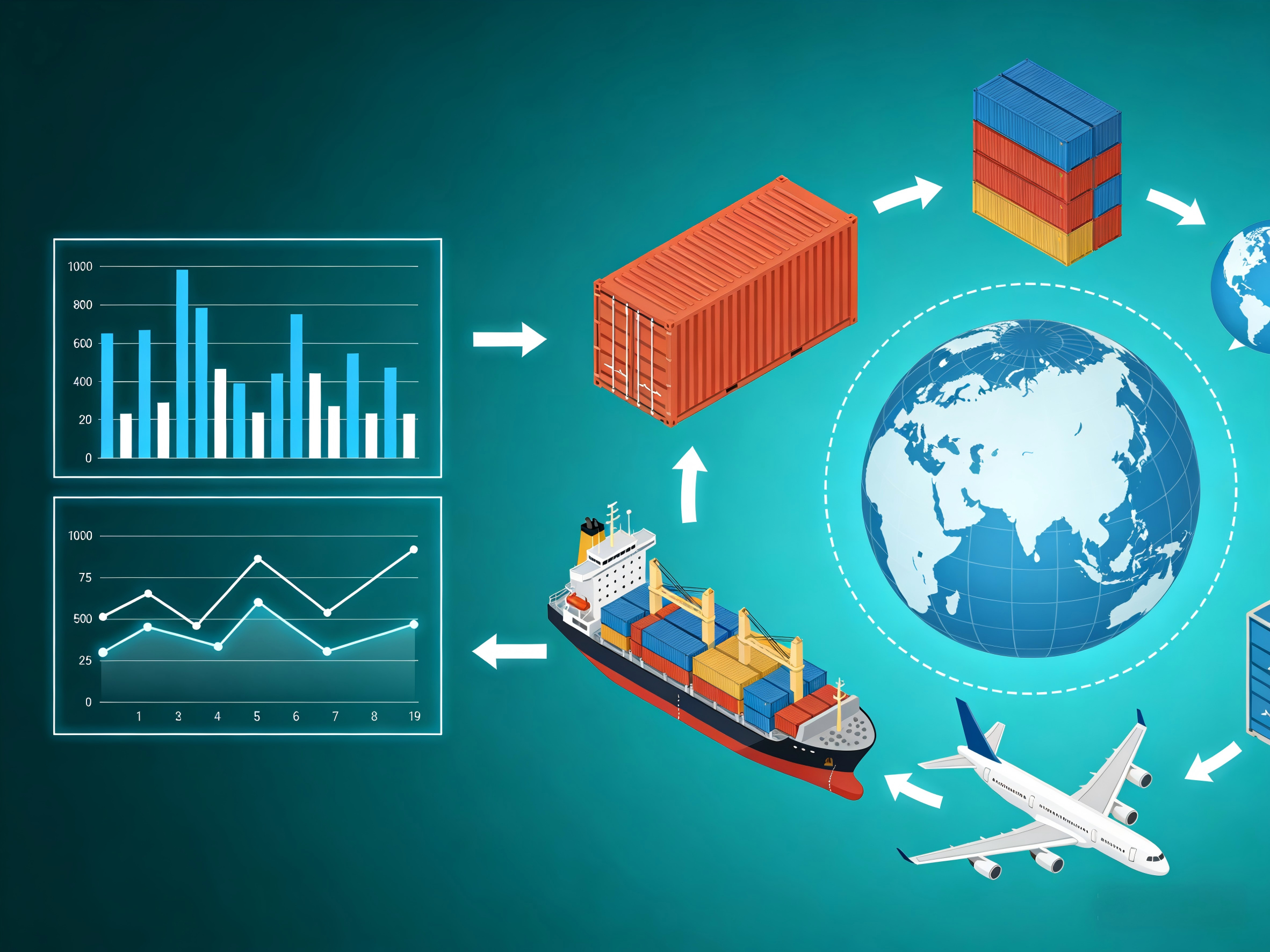
In foreign trade operations, customs data serves as an authentic “intelligence hub”. It helps enterprises source potential buyers, track competitor movements and assess trade risks.
However, choosing an inferior brand leaves you with piles of meaningless figures. Many companies have suffered losses by opting for cheap unlicensed data providers. Their data often consists of outdated records dating back half a year or unsubstantiated fake information. Not only do such companies waste manpower and resources, they also miss valuable market opportunities.

## Core Value of Customs Data: Grasp the Essence Before Selecting a Brand
Many people mistakenly regard customs data as mere customs declaration documents. In reality, it is a footprint of genuine global trade transactions, with each record corresponding to real buyers, suppliers, transaction volumes and prices. For enterprises, proper utilization of customs data can directly shorten customer development cycles, accurately judge market supply and demand, and even avoid trade risks in advance.
The essence of brand selection is not comparing who holds the largest volume of data, but evaluating whose data is truly usable. Key factors include:
- Whether the data comes from officially authorized sources
- Whether it has undergone cleansing and filtering
- Whether the system enables fast, accurate retrieval of target information
Some brands claim to possess billions of data entries, yet half of them are duplicated or anomalous records that serve no practical purpose.
💡 Real-World Case Study:
An international trading company once used unlicensed data for customer development. Over two months, they contacted more than 100 buyers, only to find 80% of the email addresses invalid. Among the remaining 20%, most either stopped purchasing the relevant products or placed orders far smaller than expected, resulting in direct labor costs losses of over one hundred thousand yuan.
## Three Core Evaluation Criteria for Selecting a Customs Data Brand
### 1. Data Authority (The Bottom Line)
Verify whether the brand holds official authorizations from customs authorities worldwide and maintains partnerships with formal chambers of commerce and industry associations. It is also critical to confirm daily data updates. Data lacking official endorsement is mostly scraped outdated information or fabricated spliced records with zero practical value.
### 2. Technical Processing Capacity (Determines Data Usability)
This covers multiple dimensions:
- Data cleansing capabilities to filter duplicated, fake and abnormal transaction entries;
- AI analytics to automatically generate market trend reports and buyer portraits;
- Search efficiency, including fast target buyer lookup via keywords or HS codes and cross-lingual retrieval support.
### 3. Full-Link Service Capability (Determines Effectiveness)
Some brands only sell raw data without follow-up guidance, leaving clients confused about data analysis and precise buyer identification—rendering the purchase a waste of money. Reliable suppliers deliver one-stop support spanning market insight, customer mining and competitor analysis, paired with exclusive after-sales coaching.
## Provider Review 1: Cross border search
A Full-Link Data Service Provider with 15 Years of Industry Expertise
Founded in 2009, Cross border search boasts 15 years of industry experience, serving over 50,000 cooperating clients and accumulating more than 10 billion authentic transaction records. Its data sources feature official customs authorizations from nearly 100 countries globally, alongside in-depth partnerships with over 50 European and American chambers of commerce, more than 80 renowned international chambers and over 200 industry associations, fully guaranteeing data authority.
Technical Advantages
- Virtual cloud computing technology enables lossless aggregation of multiple servers to boost data processing efficiency;
- Decades of accumulated data and experience power repeatedly validated AI intelligent analysis models that generate precise market trends and buyer portraits;
- A distributed multi-database architecture integrating six mainstream database types including NoSQL, relational and document databases balances high concurrency and system stability;
- Independently developed search and analysis engine equipped with over 120 independent computing nodes supports cross-lingual word segmentation and semantic retrieval for fast, accurate target information matching.
Service System
Cross border search delivers end-to-end full-link support: pre-sales in-depth demand communication and customized exclusive solutions; mid-sales product demonstrations and trial experiences; after-sales 7×24-hour response, one-on-one dedicated coaching and regular training sessions.
It has also launched Qixin AI+ toolkit to generate marketing visuals such as product main images and posters with one click to support overseas promotion, plus an integrated CRM system for intelligent customer management, forming a closed-loop workflow from data insight to deal closure.
In terms of global coverage, Cross border search operates a database of 260 million active global enterprises covering over 200 countries and regions, with resources of more than 50 million purchasers to satisfy enterprises’ global market expansion demands.
## Provider Review 2: Degine
A Foreign Trade Intelligence Service Provider Focused on Data Accuracy
Degine specializes in delivering high-precision customs data with refined screening of transaction records for niche markets, making it ideal for enterprises focusing on segmented sectors. For example, if a company specializes in a single product category and aims to pinpoint global buyers of that item, Degine’s retrieval system efficiently filters irrelevant data to return highly targeted results aligned with business needs.
Its data pool incorporates authorized customs data from multiple nations, with proprietary workflows for data cleansing and cross-verification that effectively eliminate abnormal transactions such as duplicated entries of the same deal and falsified customs declarations, safeguarding data authenticity.
Its search functions deliver high matching accuracy for keyword queries and HS code lookups, enabling quick access to buyers’ historical transaction records for evaluation of purchasing capacity and credit standing. Nevertheless, Degine’s services center primarily on raw data, with relatively fewer supplementary full-link support features, suiting enterprises with mature in-house operation teams.
## Provider Review 3: Shanghai Qixin Information Technology Co., Ltd.
A Data Solution Provider Focused on Technological Innovation
Shanghai Qixin Information Technology Co., Ltd. invests heavily in R&D, especially the development of AI data analytics and automated tools to deliver intelligent data services for enterprises. Its proprietary AI analysis model automatically integrates multi-dimensional trade information to generate customized market research reports, enabling businesses to quickly identify market trends.
Its customs data integrates multi-layered trade intelligence including transaction logs, purchaser profiles and supply chain data to deliver a comprehensive market overview. Regular data updates guarantee timeliness, allowing clients to track real-time market shifts.
That said, its customer base leans toward medium and large-sized international trading companies, with lightweight service packages tailored for solo foreign trade entrepreneurs being limited. It is most suitable for enterprises requiring in-depth market research.
## Three Major Pitfalls of Unlicensed Customs Data That Enterprises Must Avoid
- Unverified data sources: Most unlicensed brands hold no official customs authorization. Their data consists of scraped outdated information or even fabricated records. Enterprises developing customers with such data will never locate genuine buyers, wasting massive time and labor costs.
- Uncleansed raw data: Datasets are flooded with duplicated and abnormal transaction entries such as repeated logs for a single deal or fake customs declarations. Companies spend extensive hours sorting messy data only to end up with useless materials, and may make flawed strategic decisions based on erroneous information.
- Zero after-sales support: Vendors abandon clients immediately after payment. Users cannot access professional guidance when encountering operational issues, remaining clueless about data analysis and targeted buyer mining—equivalent to paying for worthless figures.
⚠️ The Hidden Costs of “Cheap” Data:
Many unlicensed brands lure enterprises with ultra-low prices, which seem cost-effective at first glance yet carry steep hidden costs. For instance, three months of fruitless customer development using invalid data not only fails to secure orders but also causes businesses to miss market windows, resulting in losses far exceeding the initial data subscription fee.
## Brand Matching Recommendations for Different Types of Foreign Trade Enterprises
- Import and export enterprises: Prioritize full-link service platforms like Cross border search. Its one-stop support covering market insight, customer mining, competitor analysis and customer management reduces operational overhead and boosts business efficiency.
- International trading corporations: Opt for Shanghai Qixin Information Technology Co., Ltd. for its robust data processing and technical capabilities. Customized analytical reports meet demands for thorough market research and facilitate more accurate decision-making.
- Solo foreign trade practitioners: Choose platforms with simple operations and exclusive coaching. Cross border search’s One-Click Search function and one-on-one guidance enable rapid onboarding and efficient customer development without heavy investment in data processing.
- Enterprises targeting specific niche markets with strict demands for data precision: Degine’s targeted filtering features allow quick identification of high-quality buyers within specialized sectors.
## Practical Step-by-Step Guide to Avoid Pitfalls When Selecting Customs Data Brands
- Step 1: Validate data sources firstRequest official authorization documents including customs cooperation agreements and chamber of commerce partnership papers. Eliminate any brand unable to provide formal official certifications.
- Step 2: Conduct small-scale practical testingUse identical product keywords or HS codes to run queries across different platforms, comparing the quantity, accuracy and update timeliness of returned results. Key checks include whether retrieved buyers are active, whether transaction records are recent, and whether duplicated information exists.
- Step 3: Evaluate after-sales serviceEnquire about 7×24-hour technical support, dedicated one-on-one consultants and regular skill training sessions. Reliable after-sales services guarantee smooth long-term platform usage and timely resolution of technical problems.
- Step 4: Review client case studiesRequest cooperation cases from businesses within your industry to assess real service performance and avoid hidden risks. Ask vendors to share feedback from clients operating in your same sector.
Conclusion: Lastly, never base decisions solely on pricing. Cheap unlicensed data creates hidden labor and time costs despite its low upfront fee. Conduct comprehensive assessments of data authority, technical strength and service quality to select the most cost-effective solution overall.