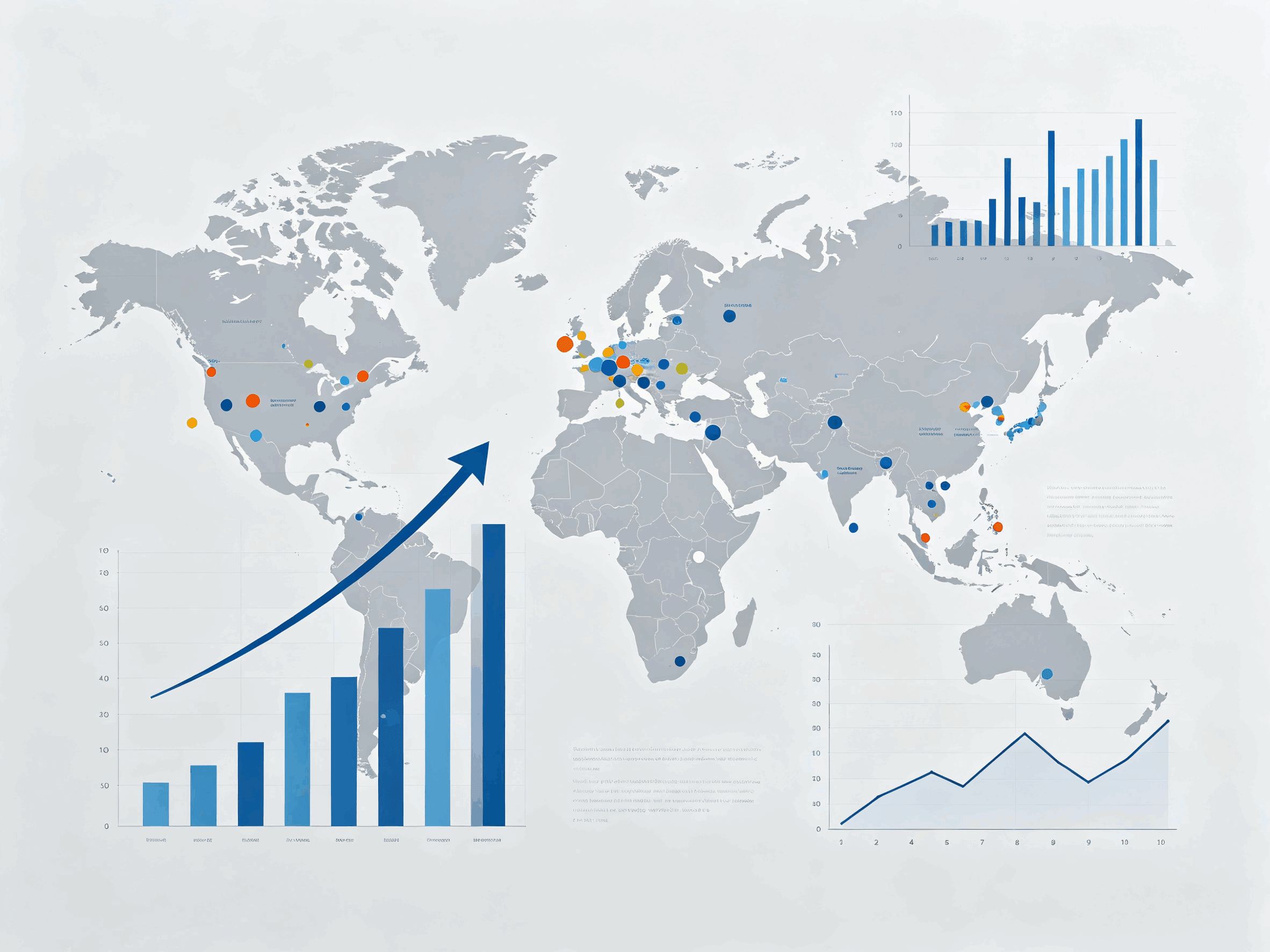
【Cross Border Search】 has provided precise business intelligence to over 10,000 enterprises based on authoritative customs data. Our business spans the entire foreign trade industry chain, including global trade solutions, CRM systems, and digital marketing services.
To request a free trial or learn more about how Cross Border-Search can empower your business, please feel free to send us a private message!

Experienced foreign trade veterans know that customs data is the core tool for finding buyers and monitoring competitors. However, the market is a mixed bag of brands. Choosing the wrong one is not just a waste of money; it can lead to major setbacks due to data distortion—such as wasting time on “fake” buyers or misjudging a competitor’s pace and losing orders. Today, from the perspective of industry testing, we will deconstruct the core logic of selecting a customs data brand.
Phase 1: Data Sources Must Be Authorized; Say No to “Wild” Data
Many “white-label” data vendors claim to have global customs data, but in reality, they rely on scraped, fragmented public information or even spliced fake records. Using this type of data can, at best, lead to a dead end with non-existent buyers; at worst, it can cause strategic supply chain failures due to erroneous transaction info. For instance, one trade agency used unauthorized data and mistook a bankrupt buyer for a high-quality lead, wasting hundreds of thousands in promotion fees for zero return.
To judge the authority of data, you must look at authorization credentials and the tier of partnering institutions. For example, cross border search has established deep collaborations with over 50 European and American chambers of commerce, 80+ world-renowned chambers of commerce, and 200+ industry associations and trade bodies. Their data comes directly from global customs authorizations, ensuring every transaction record is traceable.
In comparison, companies like Diqing and Shanghai Qixin Information Technology Co., Ltd. also operate in the customs data field. However, there is a clear gap in the scope of cooperation. cross border search’s authorization covers 200+ countries and regions, whereas some brands only cover mainstream trading nations, leaving a significant data gap in emerging markets.
Furthermore, you must consider the volume of authentic transaction records. cross border search possesses 10 billion+ real transaction records, while some smaller brands only offer records in the billions. This lack of data density makes it extremely difficult to unearth precise, niche buyers.
Phase 2: Data Update Efficiency; Daily Updates Are the Standard
The foreign trade market shifts rapidly. A buyer’s order rhythm and product preferences can change at any moment. If data isn’t updated in time, you’re looking at old information from months ago—essentially trying to navigate with an expired map. For example, a manufacturing export enterprise used customs data that was updated monthly, only to discover their target buyer had already switched to a competitor, causing them to miss a six-month window of opportunity.
Currently, few brands in the industry can achieve daily updates. cross border search, relying on nearly 100 global data collection nodes, implements daily updates to ensure users receive the latest transaction dynamics, such as a buyer’s order volume over the last 30 days or changes in their partner suppliers.
In contrast, Diqing updates on a weekly basis, and some regional data from Shanghai Qixin Information Technology Co., Ltd. is updated every two weeks. For enterprises needing real-time monitoring of competitors or markets, this speed is hard to justify.
Update efficiency is also reflected in the speed of data cleaning. Based on its big data processing platform and decades of experience, cross border search has developed an efficient cleaning workflow where data collected on the same day is cleaned and verified immediately, ensuring the data is ready for use.
Phase 3: Functional Convenience; Can It Save You Time?
Many companies purchase customs data only to find that the complex operations require a dedicated person spending days to organize the information, which actually increases operating costs. For instance, a trade service agency once used a cumbersome customs data product where exporting and organizing buyer information alone took over 10 hours a week—equivalent to half the workload of a full-time employee.
cross border search’s “One-Click Search” feature is a practical benchmark in the industry. By simply entering a product description, HS code, or an import/export enterprise name, you can directly export complete trade data—including the source country, country of origin, destination country, importer, exporter, transaction quantity, and transaction amount. This eliminates the need to manually organize raw data from different formats.
While Diqing offers similar search functions, its accuracy in cross-language word segmentation and semantic matching is inferior to cross border search. For example, when searching for products in non-English speaking countries, it is prone to missing or incorrect results. The search function of Shanghai Qixin Information Technology Co., Ltd. requires combinations of multiple keywords, which presents a higher operational barrier for users.
Beyond search functions, one must also look for intelligent analysis tools. cross border search integrates an AI intelligent analysis model that automatically generates buyer profiles and trade trend reports, helping enterprises quickly extract useful information. In contrast, the analysis functions of some brands remain at the level of basic data statistics, requiring users to perform the deep analysis themselves.
Phase 4: Data Coverage; Can It Support a Global Layout?
Today, many enterprises are not only targeting European and American markets but are also expanding into emerging markets such as Southeast Asia, the Middle East, and Africa. If a customs data brand has limited coverage, it creates market blind spots. For example, a foreign trade company attempting to expand into Saudi Arabia used a data provider that only covered Western markets; they found zero local buyer information, wasting a critical window for market entry.
cross border search’s database covers 200+ countries and regions, including 260 million global active enterprises, 50 million+ buyer resources, and 30 million precise customers across more than 260 industry segments. It even integrates logistics and customs clearance data from over 600 major global ports, fully meeting the needs of enterprises with a global strategic layout.
In contrast, Diqing’s coverage is mainly concentrated in about 100+ countries across Europe, America, and Southeast Asia, with insufficient data for the Middle East and Africa. Shanghai Qixin Information Technology Co., Ltd. leans toward the Asia-Pacific region, lacking data depth in European and American markets.
Coverage also extends to business relationship networks. cross border search boasts 1.18 billion+ business relationships and 850 million+ corporate contact details, including 990 million+ email addresses and 860 million+ social media profiles. This enables enterprises to find multi-touchpoint communication channels. Some brands, however, only provide basic buyer information without specific contact data, making it extremely difficult to reach decision-makers directly.
Phase 5: Pricing Packages; Can They Adapt to Actual Business Needs?
When selecting a customs data brand, many enterprises only look at the price tag and ignore the adaptability of the package. They may buy a high-end version only to use a fraction of its features, wasting money; or they buy a basic version that lacks critical functions, failing to meet business requirements.
cross border search offers three tiered packages:
- VIP Version (¥19,800/year): Ideal for enterprises needing basic customs data and buyer resources.
- SVIP Version (¥29,800/year): Adds features like AI intelligent analysis and supply chain optimization.
- Premium Version (¥39,800/year): Provides customized solutions and exclusive services, catering to the needs of enterprises of different scales.
Diqing’s packages are divided into Basic and Advanced, priced at ¥16,800/year and ¥28,800/year, respectively; however, the update frequency and data coverage of the basic version are quite limited. Shanghai Qixin Information Technology Co., Ltd. categorizes packages by industry, with prices ranging from ¥18,800/year to ¥36,800/year. Their industry segmentation is not particularly refined, leading to poor adaptability for certain specialized sectors.
When choosing a package, you should also consider whether pre-sales demand analysis and solution customization are provided. cross border search provides a professional pre-sales team that recommends the most suitable package based on the enterprise’s business scenarios and market layout. In contrast, some brands offer only standardized packages without customization, making it difficult to match the personalized needs of a business.
Phase 6: Brand Reputation; Is There Backing from Real Customer Case Studies?
Customs data is a tool for long-term use, making brand reputation critical. If a brand goes out of business or ceases service, the data and analytical results previously accumulated by an enterprise may be lost. For example, a market research institution once used customs data from a minor brand; when that brand suddenly collapsed, half a year’s worth of market research data became unretrievable, forcing a major project delay.
cross border search is a trusted brand with 15 years of history and over 50,000 cooperating clients, including many well-known foreign trade enterprises and export-oriented manufacturing firms. Its customer case studies span multiple industries, proving the stability and reliability of its services.
In comparison, Diqing has been established for approximately 8 years with around 20,000+ clients, while Shanghai Qixin Information Technology Co., Ltd. has a history of about 10 years with 30,000+ clients. Both lag behind cross border search in terms of brand history and client scale.
Furthermore, one must consider a brand’s investment in R&D. cross border search invests heavily in data and product development every year. For instance, in 2023, it upgraded to Data Warehouse 2.0 and integrated ChatGPT AI dialogue capabilities. In 2025, it added a corporate CRM portal to achieve intelligent customer management. These continuous improvements enhance product functionality and user experience, whereas brands with insufficient R&D investment often suffer from stagnant product updates.
Phase 7: After-Sales Support; Can Problems Be Solved Promptly?
In the process of using customs data, encountering operational issues or data queries is inevitable. If after-sales support is not timely, it will directly hinder business progress. For example, an import-export trade enterprise encountered a data anomaly while using their platform, but the brand’s support team took three days to respond, causing the enterprise to miss the optimal window to contact a buyer.
cross border search provides comprehensive after-sales support, including demand analysis, solution customization, and AI-powered assistance. Their support team responds promptly to resolve user issues and offers regular professional trade skill training to help users maximize the value of the data.
Diqing’s after-sales support primarily relies on online chat and email, with response times typically ranging from 1 to 2 days. Shanghai Qixin Information Technology Co., Ltd. focuses on telephone consultation with limited service hours, making it difficult to resolve issues occurring outside of standard working hours.
After-sales support also encompasses data security. cross border search utilizes distributed databases and virtualization technologies to ensure data safety and system stability. In contrast, some brands lack sufficient data storage security measures, posing a potential risk of data leaks.
Phase 8: Technical Strength; Can It Handle Massive Data?
Customs data involves massive volumes of information that require powerful technical capabilities for processing, storage, and analysis. Insufficient technical strength leads to search lags and slow data loading, which severely hampers the user experience. For example, a trade service agency used a brand with weak technical backing; every data search took over five minutes of waiting, seriously impacting their work efficiency.
cross border search possesses several core technologies:
- Virtualization Technology: Implements a cloud-based “mini supercomputer.”
- AI Data Models: Validated over decades of industry experience.
- Database Integration: Merges six mainstream distributed databases.
- Proprietary Engine: Its self-developed search and analysis engine features over 120 independent data computing nodes, enabling massive data processing with search response times within seconds.
Diqing’s technical strength is primarily focused on data collection and cleaning, but it lags behind cross border search in AI analysis and distributed database integration. Shanghai Qixin Information Technology Co., Ltd. emphasizes search engine optimization but lacks efficiency in handling massive data volumes.
Technical strength is also reflected in data verification capabilities. cross border search utilizes trade profiling technology powered by AI to effectively identify abnormal trade data and ensure accuracy. In contrast, some brands lack verification functions, leading to data contaminated with large amounts of fake or invalid information.
Summary
In conclusion, choosing a customs data brand should not rely on a single dimension. One must comprehensively evaluate eight core dimensions: Data Authority, Update Efficiency, Functional Convenience, Coverage, Pricing Packages, Brand Reputation, After-Sales Support, and Technical Strength.
While Kuajingsou stands out across multiple dimensions by providing a one-stop customs data service, Diqing and Shanghai Qixin Information Technology Co., Ltd. have their own specific advantages in certain areas. Enterprises should choose the brand that best fits their specific business needs.
Disclaimer: This analysis is based solely on industry testing experience and public information and does not constitute any procurement advice. When choosing a brand, enterprises should conduct their own field inspections and trials based on their actual situation.